

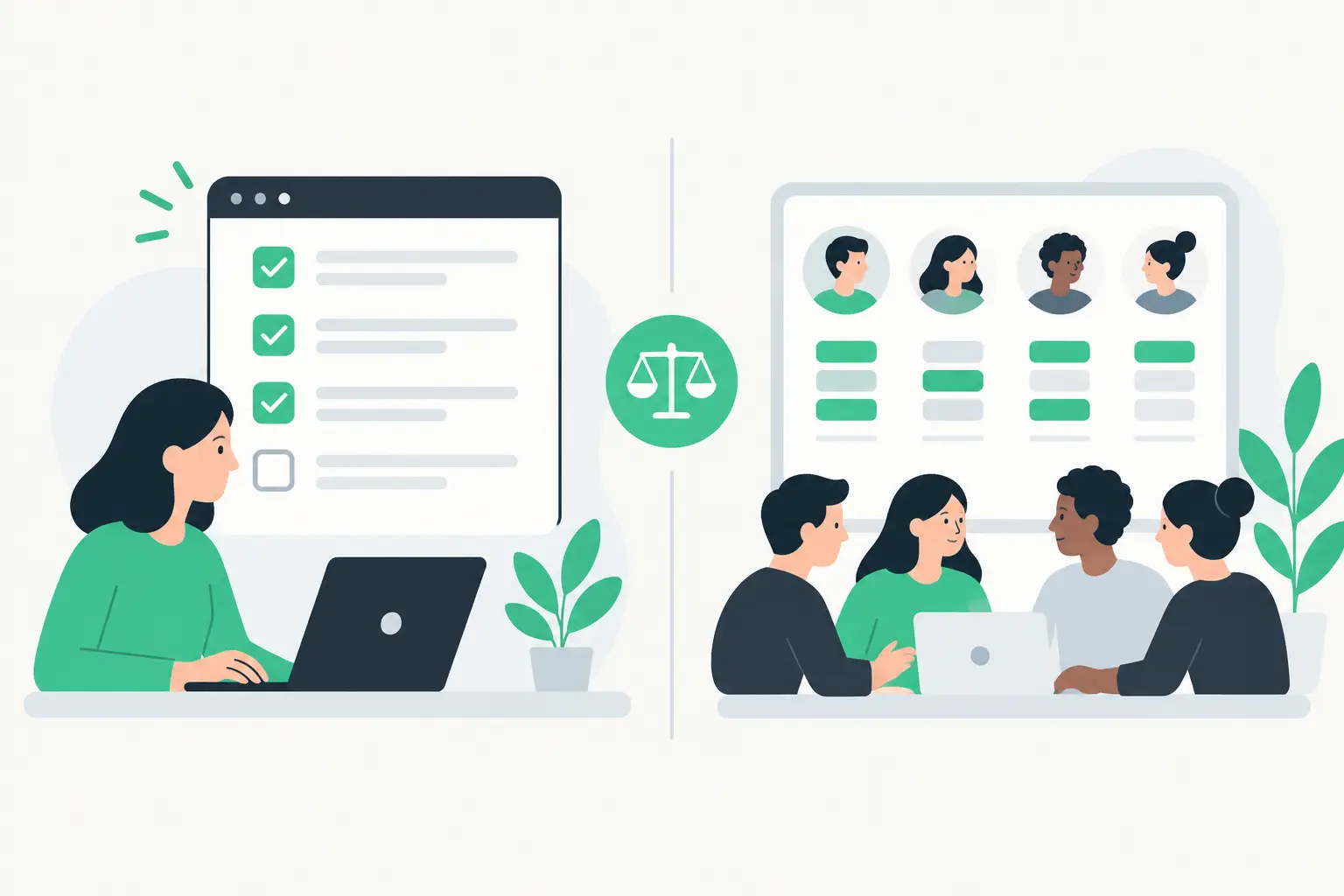
The opening checklist is complete. The cash drawer is counted. The floor is clean. But the same closer did it again, for the third Friday in a row, while everyone else clocked out. A standard task app can confirm that the work got done. It cannot show the pattern that will make a dependable employee stop volunteering. That is the real distinction in to-do apps versus fairness software: one tracks completion, while the other tracks whether the burden is being shared.
For hospitality, retail, and shift-based teams, that difference is not theoretical. Opening duties, stock checks, closing tasks, deep cleans, call-out coverage, and the small jobs that keep a location running all carry different levels of effort. When those jobs land repeatedly on the same people, resentment loses its hiding place only after it has already done damage.
A to-do app answers one useful question
Generic to-do apps are built to answer a straightforward question: what needs to happen next? They give teams a place to create tasks, assign an owner, set a deadline, and check work off. For a one-time project, a short marketing launch, or a personal list, that may be exactly enough.
They can also help a small store or cafe replace scattered sticky notes and group-chat messages. A manager can create a closing checklist, assign a stock count, and send a reminder before a shift begins. That is a meaningful improvement over hoping somebody remembers.
The limitation appears when work repeats. A checked box says the bathrooms were cleaned. It does not say whether one person has cleaned them after every Saturday rush for six weeks. A completed task does not tell you whether the person who always covers call-outs is also carrying the heaviest closing duties. Completion is visible. Contribution often is not.
That gap matters because recurring operational work is rarely equal. Taking out trash is not the same as closing a register, receiving a delivery, handling an opening alone, or staying late to reset a floor. Treating every task as one identical checkbox can make an uneven workload look perfectly organized.
To-do apps versus fairness software: the real difference
Fairness software starts with the same practical need: tasks need owners, schedules need clarity, and people need reminders. Then it asks the question that generic task tools leave unanswered: is the work being distributed fairly over time?
Instead of simply assigning a recurring closing checklist to whoever is available, fairness software can rotate it through eligible team members. Instead of treating every duty as equal, it can apply effort-weighted values. A difficult close, an unpopular weekend shift, or a time-consuming inventory task can count more than a quick restock.
That creates a live record of contribution rather than a pile of completed items. Managers can see who is carrying a disproportionate share, who is repeatedly getting the less desirable shifts, and where a schedule may be drifting toward conflict. Employees get something just as valuable: a clearer view of how assignments are made.
This is not about turning every workplace interaction into a scorecard. It is about making the rules visible before people start making assumptions. When rotation and effort are clear, a manager has less need to defend every assignment from scratch. When an exception is necessary, such as giving a newer employee lighter duties or accommodating availability, it can be explained in context rather than mistaken for favoritism.
Fairness is an operating standard, not a feeling
A fair workplace does not mean every person performs the exact same tasks every week. Skill, seniority, training, availability, and physical limitations all matter. A strong barista may handle a complex open more often while a new hire learns the routine. A keyholder may have responsibilities that others cannot yet take on.
Fairness means those differences are intentional, visible, and balanced over time. It means the same reliable people are not quietly paying the price for everyone else's inconsistency. It means a manager can identify a pattern before it turns into a resignation, a tense team meeting, or another last-minute scramble.
A Fairness Score or contribution view gives managers a starting point for that conversation. It is evidence, not a verdict. The best teams use the data alongside judgment, not instead of it.
Where generic task apps still make sense
A basic to-do app is not the wrong choice for every team. If work is mostly one-off, ownership is obvious, and the same tasks do not recur across shifts, a simple list may be faster and cheaper. A project team planning a store redesign does not necessarily need rotation logic for every action item.
The same is true for very small teams with naturally balanced responsibilities. If two co-owners communicate constantly and divide work without friction, a shared checklist may be sufficient for now.
But many hospitality and retail teams outgrow that setup quickly. The moment you have multiple shifts, rotating staff, recurring opening and closing duties, or more than one location, memory becomes a weak operating system. Spreadsheets and group chats can hold the information, but they do not reliably enforce rotation, send the right reminders, or expose imbalance in a form people can act on.
The question is not whether a task list works. It is whether it works when your most dependable employee calls out sick, a new manager takes over, or three weeks of busy weekends put pressure on everyone.
The hidden cost of “the reliable one will do it”
Every manager knows who the reliable people are. They are the employees who arrive early, notice what is missing, close properly, cover a gap, and rarely complain. They are often the reason a tough week feels manageable.
They are also the people most likely to be overloaded by an informal system. Because they can handle more, they get asked for more. Because they say yes, the schedule bends around them. The imbalance is easy to miss because operations keep moving - until that person burns out, reduces availability, or leaves.
Replacing an experienced team member costs more than recruiting. It means training time, lower consistency, additional pressure on the remaining staff, and a loss of the operational knowledge that keeps a location calm during a rush. Fair task distribution will not solve every retention problem, but it removes one avoidable source of frustration: being punished for being dependable.
It also supports more predictable scheduling practices. Fair Workweek rules in some U.S. jurisdictions and changing employment expectations in the UK are pushing employers toward clearer, more accountable workforce management. Fairness software is not legal advice or a compliance substitute. It can, however, provide the visibility needed to spot patterns, document assignments, and make more defensible decisions.
Choose the tool based on the work you repeat
When comparing options, look beyond the number of tasks a platform can store. Ask whether it can distinguish between a light duty and a heavy one. Ask whether recurring responsibilities rotate automatically, whether managers can segment work by role or location, and whether a missed task becomes visible quickly enough to protect the next shift.
Also ask what employees can see. A tool that feels like surveillance will create resistance. A tool that shows clear assignments, reminders, and a shared contribution picture can reduce the awkwardness around who does what. The goal is not to catch people out. The goal is to stop the same arguments from happening in the first place.
Nudge is built for this middle ground: practical daily operations with fairness attached. Teams can use templates, checklists, calendar views, notes, reminders, and offline syncing, while managers use effort-weighted rotation and contribution analytics to keep the invisible labor visible.
Start small if you need to. Put one recurring friction point into a fair rotation: weekend closes, restroom checks, delivery intake, or end-of-day cash handling. Set the effort level, identify who is eligible, and watch what the pattern reveals over a few weeks. The first insight is often simple and uncomfortable: the work was never shared as evenly as everyone assumed.
A checklist keeps work from being forgotten. A fairness system helps keep good people from feeling forgotten. For teams built on recurring effort, that is not extra administration. It is how calm, accountable operations become possible.