

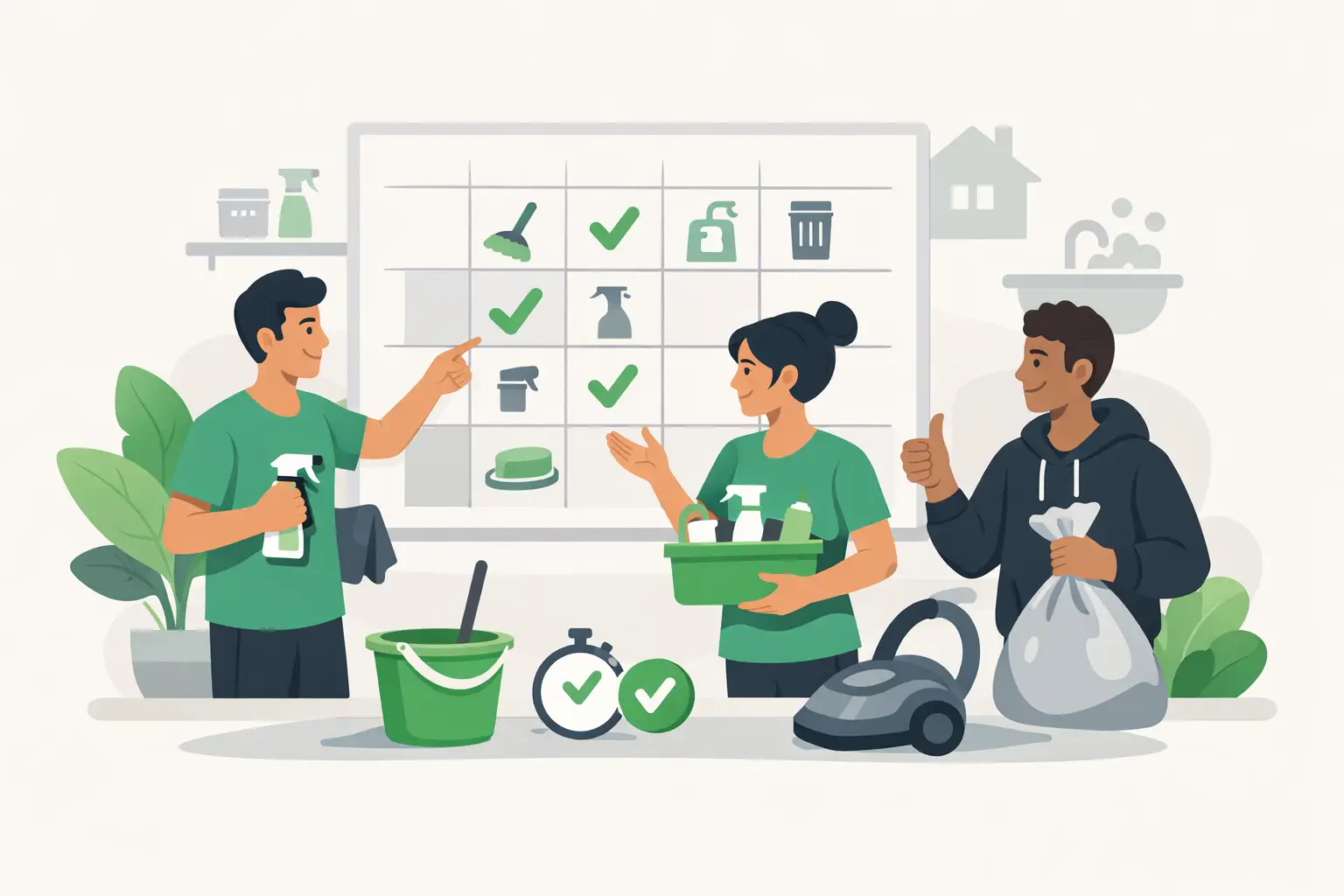
The problem with a shared house cleaning schedule is rarely the schedule itself. It is what the schedule reveals. One person notices the overflowing trash, another keeps wiping the counters without saying anything, and someone else swears they cleaned "last time." Resentment loves vagueness. The fix is not more nagging. It is a system that makes work visible, fair, and hard to ignore.
A good cleaning plan does more than assign tasks. It lowers friction between people who live together. It removes the need to remember everything, chase each other down, or silently keep score in your head. If your house feels tense every time chores come up, the issue is usually invisible labor, uneven standards, or a schedule built around wishful thinking instead of real life.
What a shared house cleaning schedule should actually do
Most chore charts fail because they confuse neatness with fairness. A tidy-looking system can still be wildly unequal. If one roommate takes out the trash once a week while another deep-cleans the kitchen, those are not equal contributions just because both tasks appear on the list.
A shared house cleaning schedule should answer four simple questions. What needs to be done, how often, who owns it this week, and how much effort does it take? When those answers are clear, you stop having the same argument in slightly different forms.
That last part matters more than people think. Effort is not the same as time. Cleaning a bathroom may take 20 minutes, but it is more unpleasant and more detailed than putting recycling on the curb. If your schedule treats all chores as equal, the people doing the harder jobs will notice immediately.
Start with shared spaces, not personal habits
If you are building a schedule for roommates sharing an apartment, couples, or a small shared property, start with the spaces everyone uses. Kitchen, bathroom, living room, floors, trash, laundry areas, entryways. These are the places where small lapses become group tension fast.
Do not begin by policing private bedrooms, personal desks, or individual mess tolerance. That is where chore systems become controlling instead of useful. A shared system works best when it protects the environment everyone relies on.
This is also where expectations need to be specific. "Clean kitchen" sounds clear until you realize one person means loading the dishwasher and another means wiping the stove, emptying the sink trap, and taking out compost. Write tasks in plain language. Wipe counters. Empty dishwasher. Mop floor. Clean microwave. Specificity prevents defensive loopholes.
Choose frequency based on mess, not optimism
One of the fastest ways to break a cleaning schedule is assigning ideal frequencies nobody can sustain. Weekly deep cleans sound responsible. They also tend to collapse by week three if the household is busy, understaffed, or simply normal.
Instead, match task frequency to consequence. High-impact jobs should happen often. Kitchen surfaces, trash, dishes, and bathroom touchpoints usually need daily or near-daily attention in active homes. Floors, mirrors, and appliance exteriors may be weekly. Deep-cleaning tasks like baseboards, fridge shelves, or inside cabinets can be monthly.
If you manage a more complex shared space, like a café back room or retreat property, frequency depends on traffic, not intention. The more people use a space, the less room there is for a "we'll get to it" system.
A useful rule is this: if skipping a task for three days causes visible stress, assign it more often. If skipping it for two weeks changes nothing, it may not need prime space on the schedule.
Rotation keeps fairness alive
The same person should not always get the gross jobs just because they are the most reliable. Reliability is valuable, but it often gets punished in shared spaces. The person who notices the problem becomes the person expected to solve it.
That is why rotation matters. Rotating jobs like bathroom cleaning, trash duty, and kitchen reset spreads both effort and annoyance. It also prevents skill silos, where one person becomes the unofficial manager of the whole house because nobody else knows the routine.
That said, pure rotation is not always the best answer. It depends on the group. In some homes, people strongly prefer certain tasks. One person would rather vacuum than scrub a toilet. Another does not mind dishes but hates laundry folding. A schedule can respect preferences without becoming unfair, but only if the effort still balances out.
This is where most spreadsheets fail. They show who did what, but not whether the load was equal. A fairness-first system works better because it tracks contribution by effort, not just by checkbox count. That is the difference between task completion and actual equity.
Build around ownership, not reminders alone
Reminders help. Ownership matters more.
If three people all think they are "kind of responsible" for the kitchen, nobody is responsible for the kitchen. Shared accountability sounds nice, but in practice it often means delayed action and awkward blame. Give each recurring task a clear owner for a defined period. That owner can trade, swap, or ask for help, but the starting point should be obvious.
This does not mean one person handles everything alone. It means there is no confusion about who closes the loop. In a healthy house system, ownership reduces negotiation. You are not reassigning labor from scratch every Sunday night.
The best schedules also separate daily resets from weekly maintenance. Daily resets keep shared spaces functional. Weekly maintenance prevents slow decline. Monthly deep cleans catch what routine upkeep misses. When all three live in one messy list, people either feel overwhelmed or only do the easy items.
How to make a shared house cleaning schedule stick
Start small enough that people will actually follow it. That sounds obvious, but many households launch with a full-color master plan that looks impressive and dies quickly.
Begin with the non-negotiables. Usually that means trash, dishes, counters, bathroom basics, and floors. Get those running consistently before adding seasonal tasks and deep-cleaning detail. Consistency builds trust. Trust makes the system easier to expand.
You also need a visible home for the schedule. A note buried in a group chat is not a system. Whether you use a whiteboard, a printed grid, or an app, everyone should be able to see the current assignments without asking. Visibility kills the excuse that nobody knew what was due.
Deadlines should be real but flexible enough for adult life. "Clean bathroom every Saturday by 10 a.m." is too rigid for most households. "Complete by Sunday evening" gives structure without turning the house into a compliance exercise.
And yes, there should be a reset point. Once a week is enough for most homes. Use it to rotate chores, review what got missed, and adjust if the load feels off. The goal is not perfection. The goal is catching imbalance before it hardens into resentment.
Watch for the hidden reasons schedules fail
When a cleaning plan keeps slipping, the problem is usually one of five things: tasks are vague, assignments are unequal, the frequency is unrealistic, nobody can see the system, or there is no consequence for doing nothing.
Consequence does not have to mean punishment. Often, it just means transparency. When contribution is visible, people are less able to hide behind good intentions. That is why fairness tracking changes behavior. It moves the conversation from accusation to evidence.
It also helps to admit that different people have different cleanliness thresholds. Some want hotel-level order. Some can live beside a pile of unopened mail for a month. A schedule should not force everyone into one personality type. It should create a baseline that keeps the space usable, respectful, and healthy.
If your household has one person doing the planning, reminding, and checking on top of their own chores, that is another imbalance. Mental load counts too. The schedule should reduce management labor, not quietly assign it to the most organized person forever.
That is one reason tools built for fairness tend to work better than generic to-do lists. If you can automate recurring chores, rotate assignments, and measure who is carrying the load, you remove a lot of the emotional static. Nudge is designed for exactly that kind of shared-space reality.
Fair does not always mean equal
This is the part households often resist, even though it solves the most conflict. Equal is not always fair.
Maybe one roommate works night shifts and handles fewer morning tasks. Maybe one partner cooks most dinners while the other takes cleanup and laundry. Maybe a property manager has less time during guest turnover weeks and picks up deeper cleaning later in the month. A strong system can handle those differences, as long as the total contribution remains visible and balanced over time.
The danger is making endless informal exceptions until nobody knows who is pulling their weight. If you are going to flex, track the flex. Otherwise people remember only their own effort and everybody feels underappreciated.
A shared house cleaning schedule works when it respects real life without becoming so loose that it means nothing. That balance is the whole job.
The cleanest houses are not always the happiest ones. The happiest shared spaces are usually the ones where expectations are clear, labor is visible, and nobody has to ask, yet again, who was supposed to wipe down the kitchen.