

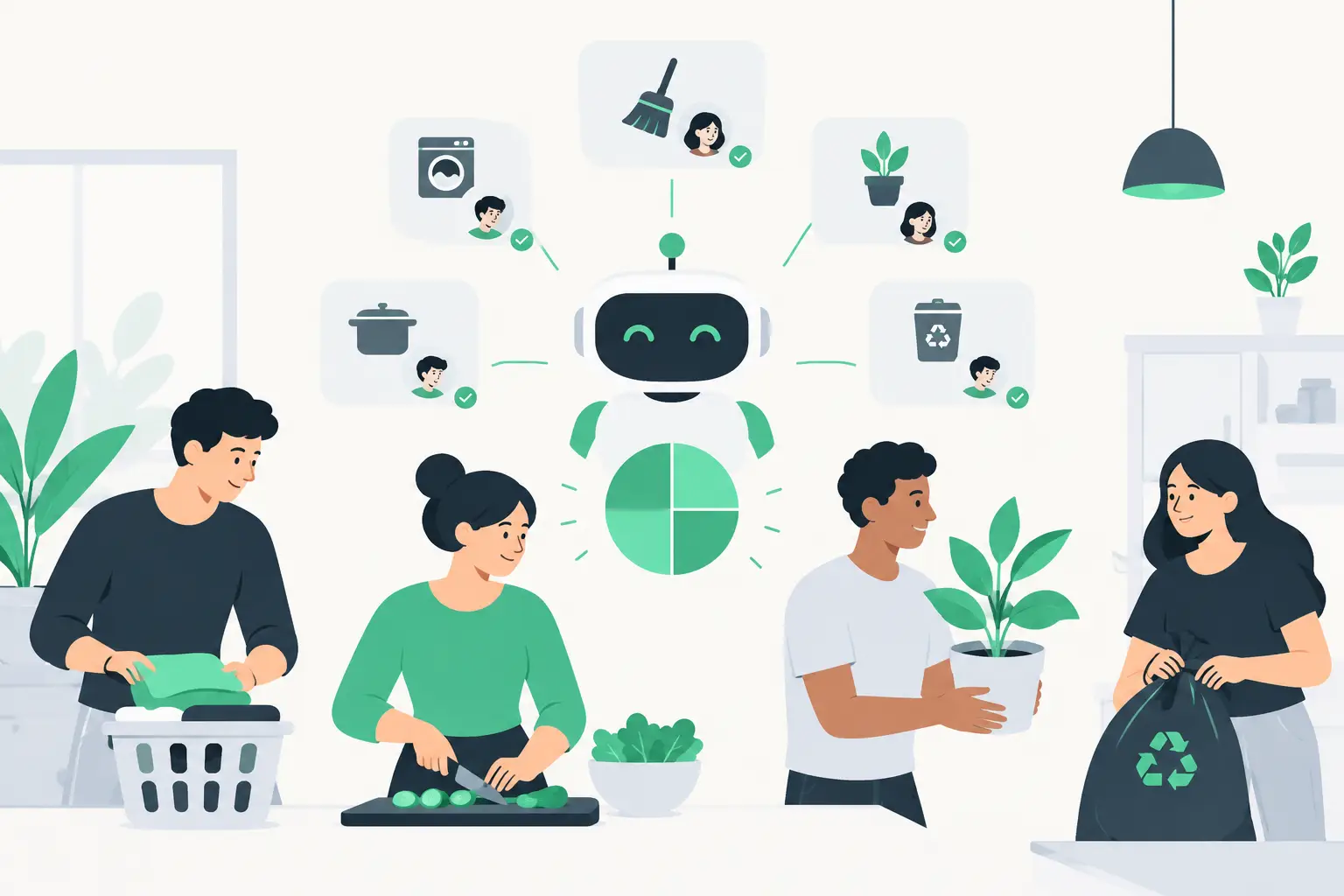
The same person closes again. The same person notices the milk delivery was missed, restocks the bathroom, and stays late to fix the handover. Nobody may have assigned that extra work, but everyone sees who picks it up. That is where resentment starts. AI for shared responsibilities can make the invisible visible, turning recurring duties into a fairer, more reliable operating system.
For hospitality, retail, and shared workplaces, this is not about replacing a manager's judgment with a chatbot. It is about removing the guesswork that lets the toughest, most dependable people carry an unfair share of the work. When task history, shift patterns, effort, and availability are visible, fairness stops being a vague promise and becomes something a team can check.
Why shared work breaks down
Most teams do not struggle because people refuse to help. They struggle because shared responsibilities are distributed informally. A manager calls out a closing task during a busy shift. A more experienced employee handles it because they know how. Someone else covers a call-out because they live nearby. Then the same pattern repeats until it feels normal.
Spreadsheets and basic rotas can show who is scheduled. They rarely show who has opened the store three Saturdays in a row, completed the heaviest closing duties, trained new hires, covered short-notice shifts, and handled the jobs nobody volunteers for. Those contributions are real work, even when they sit outside a job title.
The cost is not just a messy handover or one missed checklist item. Uneven labor creates fatigue, conflict, and turnover. The employee who always steps in eventually stops believing the team is fair. Meanwhile, managers are left dealing with a resignation that seemed to come out of nowhere. Resentment loses its hiding place only when the work itself is visible.
What AI for shared responsibilities should do
Useful AI should reduce operational friction, not add another system people have to babysit. Its job is to recognize patterns in recurring work and help managers make better assignments before an imbalance becomes a problem.
At its best, AI can recommend task rotations based on who has recently handled similar work, the effort attached to each duty, scheduled hours, skills, and stated availability. It can flag when one person is repeatedly assigned high-effort tasks or when a team is relying too heavily on the same few people for coverage. It can also turn a manager's plain-language request into a usable checklist, reminder schedule, or repeatable task template.
That last point matters. A closing shift is not a single task. It may mean cashing out, cleaning equipment, securing stock, completing temperature checks, setting up the next morning, and documenting issues. AI can help organize that work quickly. But a manager still needs to decide what good completion looks like and who is qualified to do it.
The goal is not mathematical equality at all costs. A senior barista may appropriately take on equipment calibration. A keyholder may need to lock up. A new employee may need lighter duties while they learn. Fairness means recognizing these differences, recording the effort involved, and avoiding a system where exceptions quietly become permanent burdens.
Start with work, not software
Before asking AI to distribute responsibilities, define what your team actually shares. This is the point where many teams discover their biggest blind spots.
Separate recurring duties from one-off projects. Opening, closing, cleaning, inventory counts, till checks, prep, training, and shift coverage are recurring responsibilities. Deep cleaning after a leak or reorganizing a stockroom may be occasional work, but they still need a clear owner and a realistic effort value.
Then identify invisible labor. Ask your team: What work gets done because someone notices it, not because it is assigned? This may include answering supplier questions, calming an upset customer, fixing a scheduling mistake, updating a handover note, or checking that a new teammate understands the routine. You do not need to track every helpful gesture. You do need to notice patterns that consistently fall to the same people.
Finally, assign effort rather than pretending every task is equal. Taking out trash and completing a full close are both necessary, but they do not carry the same time, stress, or accountability. Effort-weighted responsibilities give AI - and managers - better information to work with.
Build rules your team can trust
AI recommendations are only as fair as the rules behind them. If availability data is outdated, task effort is wrong, or the system treats all employees as interchangeable, automation can repeat the very imbalance it is meant to solve.
Set a few clear principles first. Rotate undesirable duties where skills allow. Avoid assigning high-effort tasks to someone who has just completed several. Respect agreed availability and labor rules. Keep required certifications and keyholder responsibilities visible. Give employees a way to flag an assignment that does not fit, without making them argue their case in a group chat.
Transparency is essential. Team members should be able to see why a task was assigned and what contribution history the system is using. They do not need access to private manager notes or sensitive personal information. They do need confidence that the process is not arbitrary.
This is especially relevant where schedules change quickly. A restaurant may need someone to cover a Friday close with an hour's notice. AI can suggest the most equitable options, but it cannot know who is dealing with a family emergency or who has already worked an exhausting double unless that information is handled carefully. Use recommendations as a starting point, not a command.
Use fairness data to prevent burnout
The most valuable signal is rarely a single assignment. It is the trend over time.
Look for concentration: Are opening duties, late closes, call-out coverage, or customer escalations landing with the same people? Look for mismatch: Is someone scheduled for fewer high-effort tasks but still carrying a heavy load through untracked support work? Look for warning signs: Is a reliable employee declining extra shifts after months of saying yes?
A live fairness score or contribution view can make these patterns easier to discuss without turning feedback into a personal accusation. Instead of saying, “You never help close,” a manager can say, “The last six closing duties have been handled by two people. Let’s rebalance next week's rotation.” The conversation becomes specific, solvable, and less likely to become defensive.
That data also helps managers reward contribution fairly. If one employee consistently takes on difficult, high-effort work, they deserve recognition and a conversation about growth, pay, or workload. Fairness tracking should not become a leaderboard that pressures people to do more. It should protect people from being quietly expected to do more.
Where human judgment still matters
AI is good at detecting patterns. It is not good at understanding every reason behind them.
A team member may prefer early shifts because of childcare. Another may be recovering from an injury. A new supervisor may need repeated closing practice. These are human circumstances, not data errors. Managers need to make room for them while ensuring accommodations do not create hidden, permanent unfairness for someone else.
There is also a privacy line. Track work that is relevant to operations and fairness. Be cautious with personal data, health information, and subjective performance assumptions. Explain what is collected, who can see it, and how it affects assignments. Trust disappears quickly when employees feel they are being scored without context.
Nudge approaches this balance by pairing practical task rotation, reminders, and checklists with effort-weighted contribution tracking. The point is not to automate empathy. It is to give empathy a reliable record, so fair intentions show up in the schedule and in the day-to-day work.
A practical first month
Start small enough that your team can feel the difference quickly. In the first week, map your core recurring duties and assign an effort value to each. In the second, set rotation rules for the tasks that create the most friction, often opens, closes, cleaning, and short-notice coverage.
In the third week, review the assignment history with your leads. Correct bad assumptions, such as a task marked “quick” that actually takes 30 minutes after closing. In the fourth, share what changed with the team and invite feedback on whether the rotation feels realistic as well as fair.
Do not wait for perfect data. A simple, visible process is better than another month of relying on memory and goodwill. The key is to review it regularly. Fairness is not a setting you turn on once. It is a practice of noticing who carries the load, then doing something about it before good people burn out.
The best shared-responsibility system gives your team fewer reasons to keep score in private. When the work is clear, the rotation is credible, and managers act on imbalance early, people can spend less energy defending their time and more energy doing work they are proud of.