

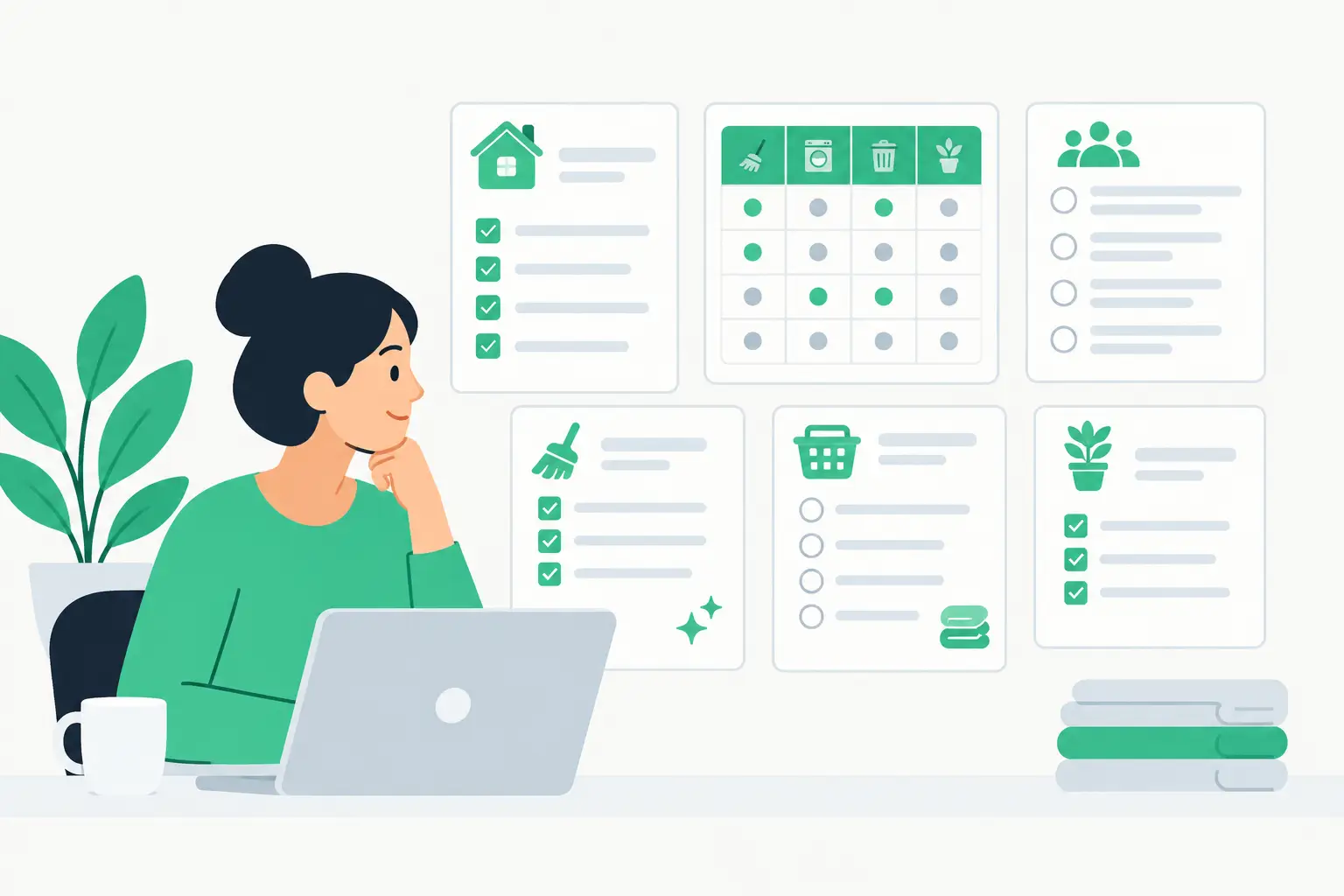
The problem with most chore charts is not the chart. It is the moment someone realizes they have emptied the dishwasher for the fifth time while everyone else walks past it. Household task template options should do more than make a tidy list. They should show what needs doing, when it needs doing, who owns it, and whether the work is actually being shared.
A good template removes the need for one person to become the household operations manager. That means fewer vague promises, fewer passive-aggressive reminders, and less invisible labor. The right format depends on your household, your routines, and whether fairness or flexibility matters most.
What a household task template needs to solve
Before choosing a format, get clear on the job. A template is not useful because it looks organized. It is useful because it makes recurring responsibilities easier to complete without negotiation every day.
At minimum, your system should separate daily work from weekly and occasional work. Loading the dishwasher, feeding pets, and wiping counters operate on a different rhythm from changing sheets or cleaning the fridge. When every task lives in one long list, urgent work gets buried and nobody knows what is truly overdue.
It should also make ownership visible. “Clean the bathroom” is not an assignment if everyone assumes somebody else will do it. Add a person, a due date or cadence, and a clear definition of done. For shared tasks, decide whether people will rotate, choose from a list, or earn credit for completing them.
Finally, account for effort. Taking out one bag of trash is not equivalent to deep-cleaning a bathroom or managing the grocery list. Equal task counts can still create an unfair household. Resentment loses its hiding place when effort is visible.
7 household task template options to consider
1. The weekly chore chart
This is the familiar grid with names across the top and days of the week down the side. It works best for families with younger children, roommates who have predictable schedules, or households that need a quick visual cue in a common area.
Keep it focused on a short set of non-negotiables: dishes, trash, pet care, kitchen reset, laundry, and bathroom upkeep. Assign each task to a day and person. The trade-off is rigidity. If someone works late on Tuesdays or leaves for the weekend, a static chart can turn into a record of missed chores instead of a workable plan.
Use this option when consistency matters more than flexibility. A whiteboard, printable sheet, or shared digital display can all work, provided it gets reviewed weekly.
2. The rotating responsibility schedule
A rotation assigns recurring jobs in turns. One week, Alex owns dishes and kitchen reset; the next week, that responsibility moves to Sam. This format is especially useful for the tasks nobody wants but everyone relies on.
Rotation prevents one dependable person from permanently inheriting the worst jobs. It also reduces the mental load of deciding who is on deck. But rotations only feel fair when the tasks are reasonably similar in effort. Rotate “bathroom clean” with “bathroom clean,” not “bathroom clean” with “water one plant.”
For couples and roommates, a simple two- or four-week cycle often works better than daily swapping. Too many handoffs create confusion and make accountability fuzzy.
3. The zone-based cleaning template
Instead of assigning individual chores, divide the home into zones: kitchen, bathroom, living areas, bedrooms, entryway, and outdoor space. Each person owns a zone for a set period, including the smaller jobs that come with it.
This option works well in larger homes and shared houses because it reduces the constant question of what counts as “cleaning.” The person responsible for the kitchen handles the counters, sink, floor, and appliance wipe-down, rather than waiting to be asked about each item.
The catch is that zones are not naturally equal. A busy kitchen may require daily attention while a guest room needs little work. Rotate zones regularly or apply effort values so the same person is not repeatedly carrying the heaviest area.
4. The daily reset checklist
A daily reset template protects the household from low-level chaos. It is a short checklist completed at a fixed point, usually after dinner or before bed: dishes handled, counters cleared, shared items put away, trash checked, and tomorrow’s essentials prepared.
This is not a deep-cleaning plan. It is an agreement that shared spaces return to neutral each day. That distinction matters. When clutter and unfinished tasks build up, the eventual cleanup feels punishing and usually lands on the person with the lowest tolerance for mess.
A daily reset works best when everyone participates for 10 to 15 minutes or when one rotating person leads it. Keep the list short enough that it can happen on an ordinary tired Tuesday.
5. The points-based task template
A points system gives each task a value based on time, unpleasantness, skill, or frequency. For example, wiping the table might be one point, a grocery run three points, and cleaning the bathroom five points. Each person aims for a roughly equal total over the week or month.
This is one of the strongest options for households where “I did plenty” has become a recurring argument. It captures work that a basic checklist misses, including planning meals, booking repairs, managing supplies, and coordinating appointments.
Points are not about turning a home into a courtroom. They are about making contribution visible before frustration hardens. Keep the values simple, revisit them after a few weeks, and avoid pretending every task can be measured perfectly. Fairness is a conversation supported by data, not replaced by it.
6. The choose-your-own-task board
With this template, all needed tasks sit in a shared “to do” column. Household members choose tasks, move them to “in progress,” then mark them complete. It gives people more autonomy than a fixed assignment schedule.
This can work beautifully for adults with changing schedules. Someone with a free morning can handle laundry; someone coming home late can take a smaller evening task. The downside is predictable: the easiest jobs often disappear first, while unpleasant or invisible work remains.
Set guardrails. Label priority tasks, assign point values, and create a rule for anything untouched after a certain time. Autonomy works when the system still protects essential work.
7. The recurring digital task template
A shared digital system is the most flexible option for households with rotating schedules, travel, caregiving duties, or many recurring tasks. It can assign chores automatically, send reminders, show completion history, and adjust responsibilities when someone is away.
This format is particularly useful when fairness has become hard to judge from memory. A platform such as Nudge can track effort-weighted recurring tasks and make uneven contribution visible without requiring someone to maintain a spreadsheet. The household gets a living record, not a once-a-week argument about who did what.
Digital tools are not magic. Notifications can become background noise, and a complicated setup will not survive real life. Start with the tasks that cause the most friction, then add detail only when it helps.
How to choose the right format
Choose a weekly chart or zone plan if your routines are stable and you want something visible. Choose rotation when the same tasks create recurring tension. Choose a points-based or digital template when the core issue is uneven effort, invisible labor, or a history of one person doing more than they can sustain.
Households with children may need a hybrid: a simple age-appropriate chart for daily responsibilities, plus an adult rotation for the work children cannot reasonably own. Roommates often do well with zones and a monthly review. Couples may prefer points or rotation because it makes planning work visible alongside physical chores.
Do not try to solve every domestic responsibility on day one. Begin with the five to 10 tasks that trigger the most reminders or conflict. Run the system for two weeks, then ask one practical question: is the home running better without one person carrying the planning?
Make the template stick
The best template has a brief review rhythm. Ten minutes once a week is enough to adjust for travel, busy periods, illness, or tasks that turned out to be bigger than expected. This is where fairness becomes practical rather than theoretical.
Avoid using the review to prosecute old mistakes. Focus on the next week: what needs coverage, what felt uneven, and what should rotate. A task system should lower the temperature in the room, not create more paperwork.
A household does not need perfect equality every day. One person may carry more during a deadline, illness, or family emergency. What matters is that the imbalance is visible, acknowledged, and temporary. Build a template that makes helping each other easier, then let it do what it was meant to do: give everyone more room to live together well.