

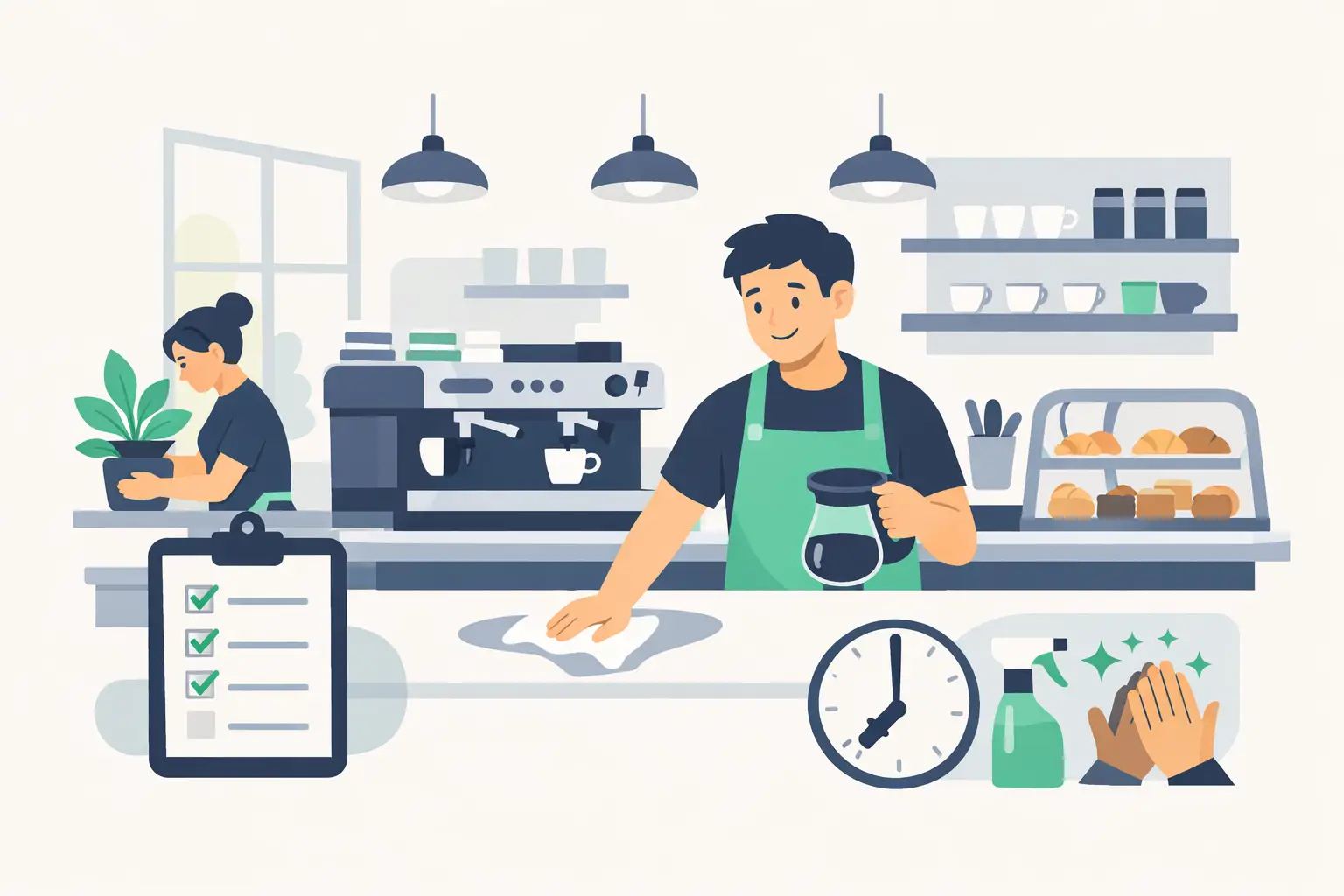
The first customer notices a sticky counter, an empty pastry case, or a missing drip coffee before they notice your team’s hard work. That is why a clear café opening duties example matters. It turns the pre-open scramble into an agreed system, makes expectations visible, and stops the same dependable person from carrying every invisible task.
Opening a café is not just about switching on the espresso machine. It is food safety, cash handling, merchandising, cleanliness, equipment checks, and setting a tone for the entire shift. When those duties live only in someone’s head, corners get cut and resentment gets room to grow.
Why café opening duties need more than a checklist
A checklist helps people remember what to do. A good opening system also answers who does it, how long it takes, what “done” looks like, and whether the workload is being shared fairly over time.
That distinction matters on a small team. One barista may be fast with milk prep but slow at counting a drawer. Another may always arrive early enough to unlock, receive deliveries, and handle the less visible cleaning work. If assignments never rotate or effort is never tracked, the reliable person becomes the default fixer. They may not complain at first. They will still feel it.
Not every duty should rotate on every shift. Opening the safe, checking refrigeration logs, or calibrating espresso may require trained staff. But specialized work should not become a permanent excuse for one person to do all the heavy lifting. Build cross-training into the schedule where possible, and balance qualified-only responsibilities with other tasks that take comparable time and energy.
A café opening duties example for a three-person team
The example below assumes a café opens at 7:00 a.m., with three staff members arriving at 6:00 a.m. Adjust it for your menu, local health requirements, equipment, and staffing level. A high-volume breakfast café may need more time for food prep. A coffee-forward shop with limited pastries may need less.
Opening Lead: security, cash, and readiness
The opening lead unlocks the café, disarms the alarm, turns on lights and music, and completes the initial safety walk-through. They check for overnight issues such as leaks, refrigeration alarms, power problems, or unsecured doors. If something is wrong, they document it and notify the right person before service begins.
They also count the cash drawer against the approved opening amount, confirm the POS is online, review the day’s notes, and check the staffing plan. This role has accountability weight even when it does not look physically demanding. A cash error or missed refrigeration issue can cost far more than a slightly crooked chair.
Bar Lead: coffee equipment and bar setup
The bar lead turns on and warms up the espresso machine, grinder, brewers, and hot-water systems according to manufacturer guidance. They check water levels, calibrate the grinder if needed, pull test shots, and taste coffee before serving customers.
Next comes stocking: cups, lids, sleeves, napkins, milks, syrups, teas, beans, ice, and cleaning cloths. The bar lead should wipe and sanitize contact surfaces, set out bar tools, and make sure the dish area is ready to keep up with service. “Machine on” is not the finish line. The bar is ready when another trained employee could step in and make a consistent drink immediately.
Floor and Food Lead: front counter, food, and guest space
The floor and food lead starts with handwashing and food-safety checks. They record required refrigerator and freezer temperatures, inspect dated items, pull anything outside safe standards, and prepare food displays using approved handling procedures.
They set up the pastry case or grab-and-go cooler, replenish condiments, stock the register area, clean tables, sweep obvious debris, and check the restroom. They also make the entry feel open: signage straight, chairs placed, patio ready if applicable, and no delivery boxes blocking the path.
If one person handles all food prep, their opening assignment should reflect that reality. Slicing fruit, heating breakfast items, labeling backup stock, and managing allergens can be more demanding than a quick front-of-house reset.
A practical 60-minute opening flow
People work faster when duties have a sequence. Assigning every task at once can create bottlenecks, especially when multiple people need the same sink, refrigerator, or counter.
6:00-6:10 a.m. - Secure and assess. The opening lead enters, checks the building, starts systems, reviews notes, and counts the drawer. The bar lead powers up equipment and begins warm-up. The floor and food lead begins temperature logs and food-safety checks.
6:10-6:30 a.m. - Prepare the essentials. The bar lead calibrates coffee and stocks the bar. The floor and food lead builds the display, prepares food, and stocks guest-facing supplies. The opening lead handles the POS, delivery checks, urgent cleaning, and any shift-specific setup.
6:30-6:50 a.m. - Reset the space. Everyone completes their primary station, then takes a clearly assigned secondary task. This may include restroom checks, sweeping, patio setup, dishwashing, restocking, or taking out waste. Secondary tasks are where workload often becomes invisible, so name them rather than relying on “help where needed.”
6:50-7:00 a.m. - Verify and open. The team does a quick readiness check. Coffee tastes right. Food is labeled and displayed. Restrooms are presentable. Music, lighting, POS, and menu boards are ready. One person unlocks the door at the scheduled opening time while the others move into service positions.
Make effort visible, not just completion
A completed task is not always an equally shared task. Wiping the counter and opening the café safely are both necessary, but they do not carry the same responsibility, time, or disruption when something goes wrong.
Give duties simple effort values based on time, skill, physical work, and accountability. For example, a quick condiment restock might be one point. Opening the cash drawer or completing a detailed food-prep station could be three points. Calibrating equipment, stocking an entire bar, and resolving an opening delivery issue may deserve higher values depending on your operation.
The numbers do not have to be perfect. Their purpose is to reveal patterns. If one person repeatedly takes the high-effort opening duties while someone else routinely receives lighter assignments, that is a management problem before it becomes a people problem.
A fairness-focused task system such as Nudge can make that pattern visible without turning every shift into an argument. Assign recurring opening tasks, rotate eligible duties automatically, record notes for exceptions, and review contribution over a week or month instead of relying on memory. Resentment loses its hiding place when the work is visible.
Build in exceptions without making the system meaningless
Cafés are not predictable. A late delivery, a broken grinder, a sick callout, or a surprise catering order can rewrite the morning in minutes. Your opening plan should leave room for judgment.
Use a simple rule: protect guest safety, food safety, and core service first. If the team is short-staffed, it may be reasonable to delay patio setup, deep cleaning, or a full backup-stock refill. It is not reasonable to skip temperature checks or serve from untested equipment because the checklist feels too long.
When someone takes on extra work during an exception, log it. That small habit prevents a common frustration: the person who saved the shift gets thanked in the moment, then quietly gets assigned the same rescue work again tomorrow.
Common opening mistakes that create friction
The first mistake is assigning roles without defining standards. “Set up the bar” can mean wildly different things to different people. Add a brief definition of done: stocked through the first rush, test shot approved, sanitizer ready, and tools clean.
The second is treating seniority as permanent task ownership. Experienced staff should handle sensitive duties until others are trained, but cross-training needs a date and a plan. Otherwise, expertise turns into a trap.
The third is rotating tasks evenly by count rather than by effort. If one employee receives three tiny tasks and another gets one high-accountability task, the schedule may look balanced while feeling anything but.
Finally, avoid using the opening huddle to air every grievance. Keep it short and operational: what changed, what needs attention, and who owns it. Save pattern discussions for a weekly check-in, where the team can look at the actual distribution of work instead of arguing from memory.
A calm opening is not created by asking people to work harder before sunrise. It comes from designing a system where the right work is clear, the hidden work counts, and no one has to become the unpaid hero of every morning.