

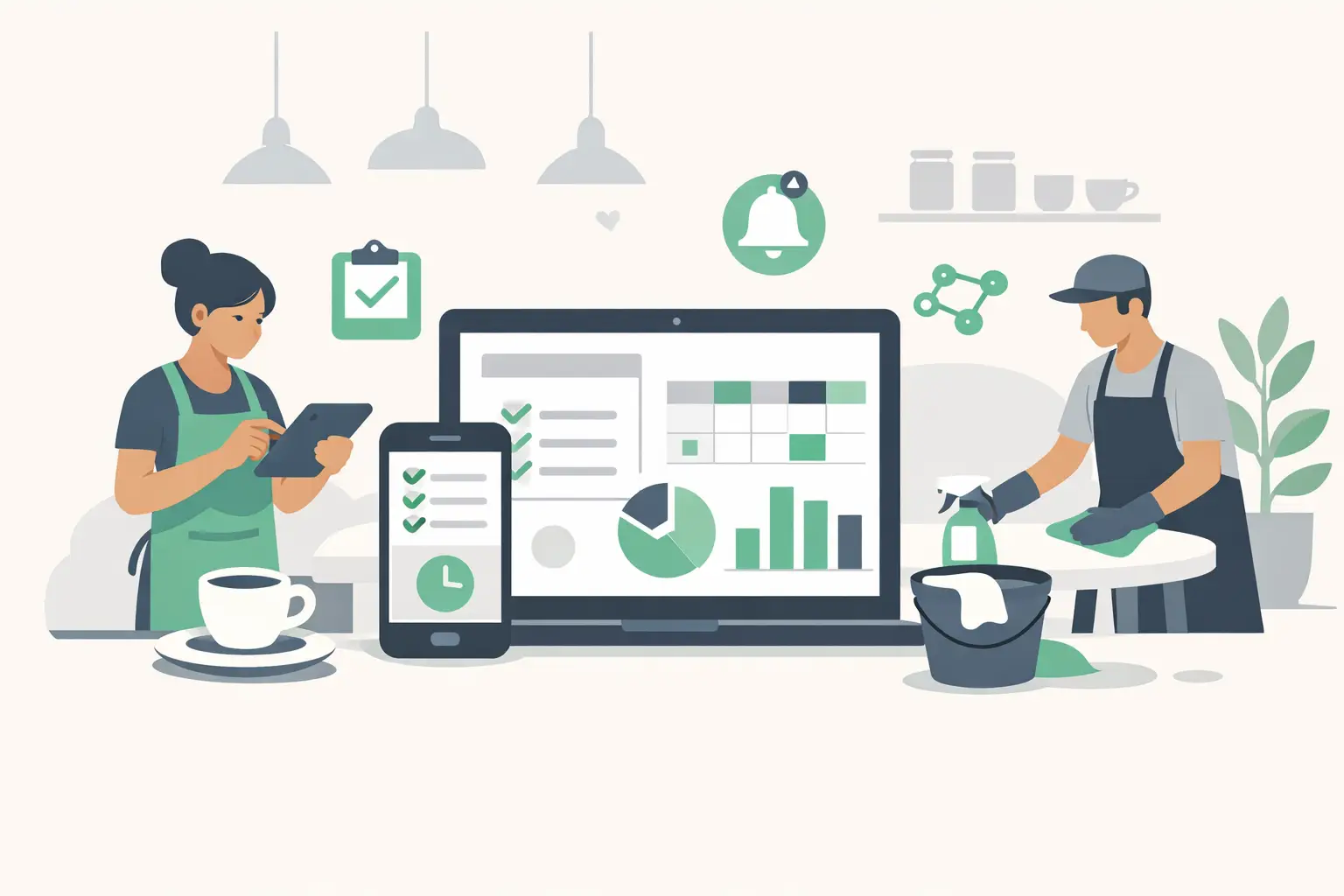
The problem with café sidework is rarely the checklist itself. It’s the quiet pattern underneath it - the same barista always restocking lids, the same closer wiping down syrup bottles, the same shift lead catching what everyone else missed. If you’re looking for the best software for café sidework, you’re not just buying task management. You’re trying to stop resentment before it becomes culture.
Cafés run on dozens of small, repeatable jobs that are easy to ignore because none of them feels big on its own. Refill milks. Break down the pastry case. Sweep under the grinder. Label backups. Rotate cold brew. Empty trash before it overflows at 8:10 a.m. The work is constant, shared, and usually invisible until it doesn’t get done.
That’s why generic to-do apps often disappoint in café settings. They can store tasks, sure. But sidework is not a one-person productivity problem. It’s a coordination problem, a follow-through problem, and often a fairness problem.
What the best software for café sidework needs to do
The best software for café sidework should make daily responsibilities visible without turning your floor into a compliance exercise. Staff need to know what needs doing, when it matters, and who’s carrying more of the load over time.
That means recurring task automation matters more than fancy project features. A café does not need a Gantt chart for wiping tables. It needs opening, mid-shift, closing, weekly, and monthly work to appear automatically, with enough structure that nobody has to rebuild the same list every day.
It also needs assignments that reflect reality. Not all sidework is equal. Restocking straws takes two minutes. Cleaning the espresso machine properly takes longer and usually lands on the same reliable person. If your software treats every task like it has the same weight, you may get completion data without getting fairness.
Visibility matters too. Managers should be able to see what was done, what was skipped, and where work is clustering. But there’s a trade-off here. Too much surveillance kills trust. Too little accountability creates cleanup debt for the next shift. The best tools land in the middle - clear enough to prevent excuses, light enough to use during a rush.
Why spreadsheets and basic checklists break down
A printed sidework sheet works until it doesn’t. Someone forgets to initial a task they actually did. Someone initials a task they rushed through. The closing list gets coffee-stained, lost, or copied forward without anyone updating it for the new menu setup.
Spreadsheets are slightly better, but only slightly. They can centralize tasks, yet they still depend on manual upkeep and don’t usually solve the social issue underneath the work. If one employee keeps getting the annoying jobs because they’re competent and don’t complain, the spreadsheet won’t flag it. It will just document the imbalance more neatly.
That’s the gap many café operators feel. They don’t need a bigger system. They need one that handles recurring responsibilities and makes uneven contribution visible before burnout hits.
The categories of software worth considering
Most café operators end up choosing from three kinds of tools.
The first is the standard task app. These are simple, familiar, and often affordable. They’re fine for basic checklists and reminders, especially in a very small café with a stable team. The downside is that they usually focus on completion, not workload balance. If your main problem is forgotten tasks, they can help. If your main problem is unfair sidework distribution, they usually fall short.
The second is restaurant operations software with sidework built in. These tools can be useful if you also need scheduling, labor controls, training, and broader store ops in one place. The trade-off is complexity. Many cafés do not want enterprise-style systems just to manage daily cleaning, restocking, and opening duties. You may end up paying for features your team never touches.
The third is fairness-oriented shared task software. This category is less common, but for cafés it can be the most practical fit when sidework tension is the real issue. Instead of only asking, “Was the task done?” it also asks, “Who keeps doing the hard stuff?” That difference matters more than most operators realize.
How to evaluate the best software for café sidework
Start with your actual pain point. If your team simply forgets recurring tasks, choose software with strong templates, reminders, and a clean mobile view. If your issue is that closers feel punished, or leads keep carrying invisible labor, you need assignment logic and contribution tracking.
Next, look at setup time. Cafés do not have hours to build a system from scratch. Good sidework software should let you create repeatable templates for opening, closing, weekly deep cleans, and role-specific duties in one short setup session. If onboarding feels like a project, your staff will resist it.
Then check how the software handles rotation. Static assignments can create false clarity while hardening unfair habits. Rotation spreads routine work more evenly and prevents the same people from becoming the default cleanup crew. This is one of the clearest signs that a tool understands shared labor rather than just task lists.
You should also look for effort weighting. This is the feature many café managers don’t think to ask about, but it changes everything. A software platform that can distinguish between quick resets and heavier sidework gives you a truer picture of contribution. Without that, your data may look balanced while your team feels the opposite.
Finally, ask whether the tool helps conversations, not just operations. Sidework software should reduce awkwardness, not create more of it. The best systems give managers something concrete to point to when they need to reset expectations: completed tasks, recurring misses, and patterns of uneven effort.
What a strong café sidework system looks like in practice
Imagine a café with eight employees, two shift leads, and a mix of opening and closing responsibilities. The opening list includes brewing tea, stocking alt milks, checking patio tables, and setting the pastry case. Mid-shift includes restroom checks, condiment restock, dish catch-up, and lobby wipe-downs. Closing includes espresso machine cleaning, floor mats, trash runs, cold bar reset, and date-label prep.
With the right software, those tasks are already templated. They appear automatically by shift or day. Staff can see what belongs to their role, and leads can quickly reassign when someone calls out. Reminders happen without a manager chasing people down between drinks.
The stronger version goes one step further. It rotates the less desirable tasks over time, tracks heavier jobs with higher value, and shows who is consistently doing more than their share. That is where friction starts to lose its hiding place.
This is also where a fairness-first platform like Nudge can feel different from a generic checklist app. Instead of asking your team to trust that things are “basically even,” it makes contribution measurable. For cafés where sidework complaints keep resurfacing, that shift can calm a lot of low-grade tension.
The trade-offs to be honest about
No software will fix unclear standards. If your team has three different definitions of what “clean the bar” means, digitizing the task won’t solve the confusion. You still need clear notes, examples, and manager follow-through.
Software also won’t replace staffing. If you are regularly running too lean, sidework will feel unfair because the workload actually is unfair. Better task coordination can reduce chaos, but it cannot create labor hours that aren’t there.
There’s also a cultural adjustment period. Some employees will love visibility. Others will feel watched at first, especially if they’re used to informal systems. That’s why implementation matters. Position the tool as a way to share work more fairly and reduce cleanup surprises, not as a trap.
How to choose without overcomplicating it
If you run one small café with a tight-knit team, you may only need recurring templates, mobile checklists, and simple reminders. If you manage multiple shifts, frequent callouts, or ongoing complaints about who does the dirty work, you need more than a checklist. You need rotation, weighting, and contribution tracking.
A good decision usually comes down to one question: are you trying to remember sidework, or are you trying to make sidework fair? Those are related problems, but they are not the same. The software you choose should match the one you actually have.
The best café systems are not the ones with the longest feature list. They’re the ones your team will use at 6:15 a.m., during a half-broken rush, and ten minutes before close. Clear tasks. Low friction. Visible accountability. A fairer split of the work nobody brags about.
When sidework becomes visible, it stops being a source of quiet scorekeeping. And that’s usually when the whole café starts to feel lighter.