

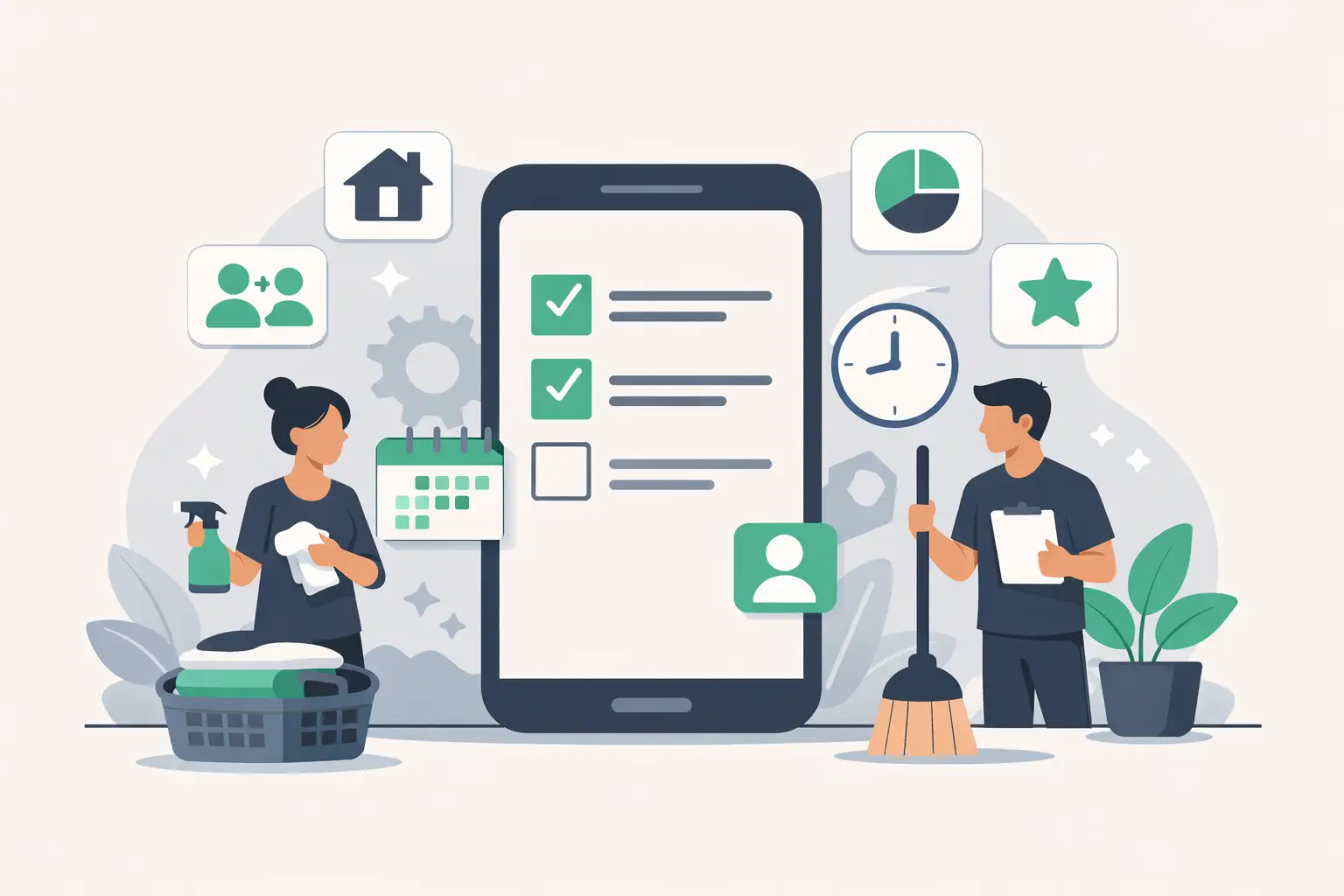
The problem usually is not the dishes. It is the sixth quiet reminder about the dishes, the feeling that one person always notices the mess first, and the low-grade tension that builds when shared work stays invisible. A good household task management app does not just create a checklist. It gives shared labor a structure people can actually trust.
That distinction matters more than most apps admit. In a shared home, the issue is rarely task creation. People already know the trash goes out, the bathroom needs cleaning, and groceries do not buy themselves. What breaks down is consistency, follow-through, and fairness. If your system cannot show who is carrying what, resentment finds a place to hide.
What a household task management app should actually solve
Most task apps are built for individual productivity. They are fine for personal reminders, project lists, or one-off errands. Shared living is different. It has recurring responsibilities, uneven schedules, invisible labor, and emotional spillover when things slip.
A household task management app should reduce the need for policing. It should make expectations visible, automate the boring parts, and remove the guesswork around who is doing more than their share. If everyone still has to negotiate every task manually, the app is just a prettier version of a whiteboard.
That is why simple checklists often fail in real homes. They can tell you what needs doing, but not whether the workload is balanced, whether tasks rotate fairly, or whether one person keeps getting stuck with the unpleasant jobs. Completion matters, but fairness is what keeps the system from falling apart after two weeks.
The features that matter most in a household task management app
The best tools do not overload you with productivity jargon. They handle a few core jobs extremely well.
Recurring task automation
Shared spaces run on repeat. Laundry, sweeping, restocking, pet care, meal cleanup, and trash duty are not special events. If recurring tasks have to be rebuilt every week, people stop using the system.
Look for flexible recurrence rules that match real life. Some jobs happen daily, some every three days, some only on weekends. The app should let you set that once and trust it to keep running. This is where consistency starts.
Fair rotation, not random assignment
Random assignment sounds neutral until the same person ends up cleaning the bathroom three weekends in a row. Rotation matters because fairness is not just about total volume. It is also about who gets the annoying jobs, the urgent jobs, and the jobs nobody notices until they are missed.
A strong household task management app should rotate responsibilities intentionally. That reduces repetitive conflict and spreads the less pleasant work across the group instead of letting it quietly settle on the most responsible person.
Effort-based weighting
Not all chores are equal. Taking out the trash is not the same as deep cleaning the kitchen. Picking up groceries on the way home may take more time and mental load than wiping down counters.
This is where many systems lose credibility. If every task counts the same, the data tells a comforting story but not a true one. Effort-weighted tasks create a more honest picture of contribution. They help households recognize not just whether tasks are completed, but how much labor each person is really carrying.
Visibility into contribution
People do not argue only because work is uneven. They argue because nobody can prove what is happening. One person feels overburdened. Another thinks they are doing plenty. Both may be sincere.
Visibility changes that dynamic. A live view of completed tasks, assigned work, and contribution trends turns vague frustration into something concrete. Resentment loses its hiding place when the workload is visible to everyone.
Reminders that support follow-through
The right reminder system prevents nagging from becoming a second job. It should prompt the person responsible without making the whole household feel micromanaged.
This sounds small, but it changes the emotional tone of shared living. When reminders come from the system instead of the most organized person in the house, accountability feels less personal and less loaded.
Why fairness tracking changes everything
A lot of apps can assign chores. Far fewer can answer the real question: is the work distributed fairly over time?
That gap matters for couples, roommates, and families, but it also matters in cafés, retreat centers, and other small shared environments. In these spaces, labor gets uneven fast. The same dependable people pick up what others forget. Standards slip, then mood slips right after.
Fairness tracking gives you a way to measure balance instead of debating it from memory. That does not mean every person does identical tasks at identical times. Real fairness is rarely that neat. People have different schedules, energy levels, and strengths. A useful app reflects those differences while still making imbalance visible.
This is where a fairness score or similar metric becomes powerful. Used well, it is not there to shame anyone. It is there to catch drift early. If one person has been carrying more for three weeks, you can adjust before burnout turns into a bigger fight.
Where generic to-do apps fall short
Generic task apps are usually built around completion, not shared accountability. They assume the user is the owner of the task list. In a household, that assumption breaks immediately.
The result is familiar. One person sets up the app, enters every task, chases updates, and keeps the system alive. Everyone else becomes a passive participant. The tool may look organized, but the labor of managing the labor still sits with one person.
A purpose-built household task management app should lighten that invisible coordination load. It should make setup fast, keep assignments moving automatically, and show the state of the work at a glance. If it creates more admin than relief, it is solving the wrong problem.
Choosing the right app for your space
The right fit depends on who is sharing the work. A couple may care most about recurring tasks, reminders, and a fair way to divide home maintenance. A larger household may need role-based views, notes, and calendar visibility. A small business or community-led space may need team segmentation, analytics, and the ability to manage multiple areas without turning into enterprise software.
Ease of adoption matters just as much as features. If people need a long onboarding process to understand the system, they will default back to verbal reminders and frustration. The best apps feel usable in minutes. You can add your recurring responsibilities, assign weights, set the rotation, and let the system carry the routine.
Offline access is also more useful than it sounds. Shared work often happens in motion - during errands, while cleaning, between shifts, or in spaces with unreliable service. If people cannot update tasks when they are actually doing them, data quality drops fast.
What better looks like in daily life
When a household task management app is working, the change is noticeable but not dramatic. That is the point. Fewer passive-aggressive texts. Fewer mental checklists. Less need for one person to remember everything.
The kitchen gets reset because someone knows it is their turn. The bathroom gets cleaned without a negotiation. Groceries are tracked, restocking happens on time, and nobody has to deliver the same reminder three times. More importantly, the group has a shared understanding of what fair contribution looks like.
That is the difference between task management and peacekeeping. One tracks chores. The other helps protect relationships.
For groups that want both operational clarity and a more honest way to divide labor, tools like Nudge stand out because they treat fairness as something measurable, not just something you hope people agree on. That shift is what makes a system sustainable.
If your current setup depends on memory, goodwill, and whoever gets annoyed first, it is already costing more than it seems. The right app will not make shared living perfect. It will make it clearer, calmer, and a lot harder for the same few people to carry everything quietly.